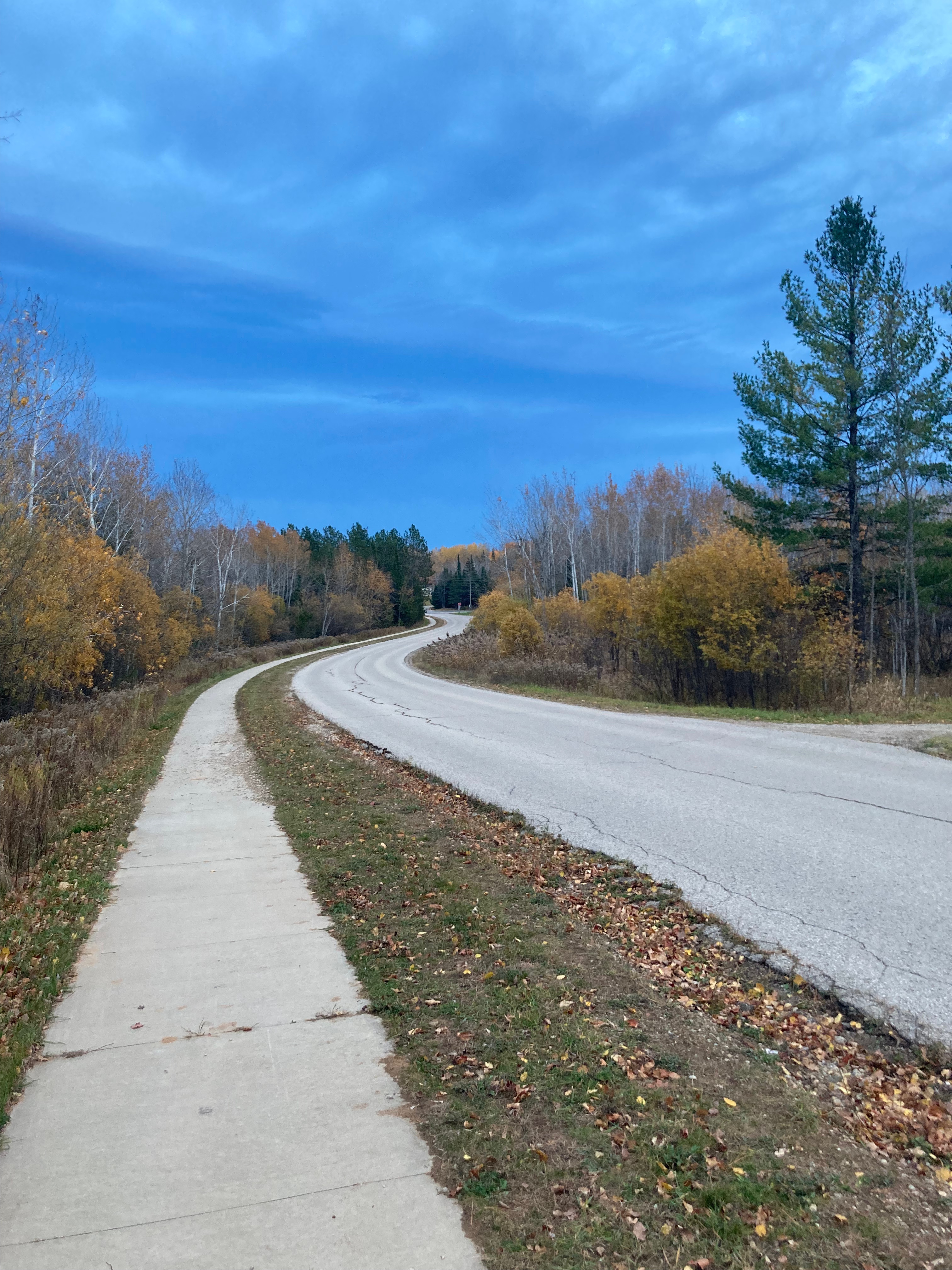

In the modern American psyche, the “daily grind” often revolves around commuting. It’s defined by the grueling physics of the commute. Hours are lost to gridlock, and it’s fueled by caffeine and the frantic pace of urban sprawl. We have come to accept this time-poverty as a necessary tax on economic opportunity. However, beneath the surface of the data for the Hannahville Indian Community, a different narrative emerges. What we find is not just a statistical anomaly, but a profound reorganization of the American dream.
This community is home to 720 people according to the 2020 Decennial Census. It offers a unique vantage point to observe an alternative economic lifestyle. By examining the 2024 American Community Survey (ACS) 5-Year Estimates, we can move beyond raw figures. We understand how this focused community of 161 households manages work, life, and industry. Their management challenges our national assumptions about progress and productivity.
The 16-Minute Commute: A Temporal Gift
The Hannahville data reveals a striking luxury. Urban planners and exhausted professionals nationwide would envy this: the “luxury of time.” While the national average travel time to work has climbed to 27.2 minutes, the residents of Hannahville experience a radically different reality.
“Average travel time to work (in minutes) in Hannahville… 15.9”
At just under 16 minutes, the local commute is 11 minutes shorter than the national average each way. This geographic intimacy translates to a temporal gift of nearly two hours reclaimed every week. This is time that can be returned to family, community, or rest. We live in a world where time is our most precious non-renewable resource. This shortened journey represents a significant boost to daily quality of life. It is an often-overlooked benefit.
The Public Sector Powerhouse
We analyze the “Class of Worker” data. A distinct pattern of stability emerges. This stability is rooted in the strength of local institutions. While private sector employment accounts for 62.5% of the workforce, the presence of the public sector is remarkably robust.
29.7% of workers in the Hannahville Indian Community are employed in local, state, or federal government roles.
This figure is more than double the U.S. national average of 14.6%. In this region, tribal and local government is more than a bureaucratic necessity. It serves as a primary engine for economic stability. It is also a testament to tribal sovereignty. This high concentration of public sector employment suggests a community that prioritizes local governance. It views essential services as the foundational bedrock of its economy.
Arts and Entertainment: The Economic Engine
It is often assumed that rural or tribal communities rely primarily on resource extraction. However, the data for Hannahville tells a modern, service-oriented story. Traditional “dirt-under-the-fingernails” industries—including agriculture, forestry, fishing and hunting, and mining—account for a mere 1.0% of the local economy. Instead, the community has leaned into the experience economy.
The top three industries by percentage are:
- Arts, entertainment, and recreation, and accommodation and food services: 33.9%
- Educational services, health care, and social assistance: 16.1%
- Manufacturing: 12.5%
Leisure and service industries lead the economy at nearly 34%. This suggests a powerful anchor institution drives the region. This institution is likely in hospitality or gaming. This is further evidenced by the fact that “Service occupations” is the most frequent job category, held by 71 individuals. This profile depicts an economy built around hospitality and community engagement rather than the raw extraction of the land.
Redefining the Cadence of Labor
The data also reveals a different rhythm to the work week. The national mean for hours worked stands at 38.4, but in Hannahville, the mean is lower, at 34.1 hours. This shift is even more pronounced when viewed by gender, with men averaging 37.6 hours and women averaging 31.4 hours.
This shorter work week must be viewed alongside the community’s employment rate of 46.7%, which sits lower than the national average of 60.6%. From a sociological perspective, fewer people in the community are active in the formal labor market at any given time. Additionally, those who are active work fewer hours on average. This might reflect a cultural emphasis on work-life balance. It could also be due to the flexible nature of service-heavy industries. The result is a community that spends significantly less of its life “on the clock” than the average American.
The Education and Income Paradox
Perhaps the most thought-provoking discovery in the ACS data is the relationship between traditional academic credentials and household income. Only 4.2% of residents hold a Bachelor’s degree or higher—a figure nearly ten times lower than the national average. In many economic models, such a low percentage of four-year degrees is treated as a precursor to economic distress.
Yet, Hannahville maintains a median household income of $46,719. This figure represents a powerful rebuttal to the “degree-or-bust” economic narrative. It suggests that, in this specific context, there is a profound dignity in labor. Specialized service roles and stable public sector positions provide a viable economic path. The community finds value through practical service. It earns sustaining wages with public administration. These opportunities go beyond strictly traditional academic paths.
Beyond the Numbers
The Hannahville Indian Community represents a unique economic ecosystem that functions on its own terms. It has short commutes that preserve the luxury of time. The public sector provides a bedrock of stability. The economic heart is driven by service and hospitality.
We see more than raw percentages. We see a community that has bypassed the frantic, high-degree-requirement, long-commute model of the modern city. They favor something more localized and balanced. It forces us to reconsider our own metrics for success and leads to a compelling final question:
If you trade 11 minutes of your commute for a completely different economic structure, would you?