

Chapter 1 – TERO 2016
The Tribal Employment Rights Ordinance (TERO) establishes a legal framework to maximize economic opportunities for tribal members and other indigenous people. This legislation mandates a hierarchical preference system for hiring, promotions, and contracting within all tribal agencies and enterprises. While the law prioritizes qualified enrolled members, it also outlines specific procedural requirements for job postings and criminal background checks to ensure community safety. To maintain accountability, the ordinance requires written justifications for any hiring decisions that bypass these established priorities. Furthermore, it provides a formal administrative review process that allows applicants to appeal adverse decisions directly to the Tribal Council. Overall, the document serves to balance tribal self-governance with professional standards by ensuring that qualified Indian candidates receive the highest consideration for employment.
Chapter 2 – Worker Compensation 2019
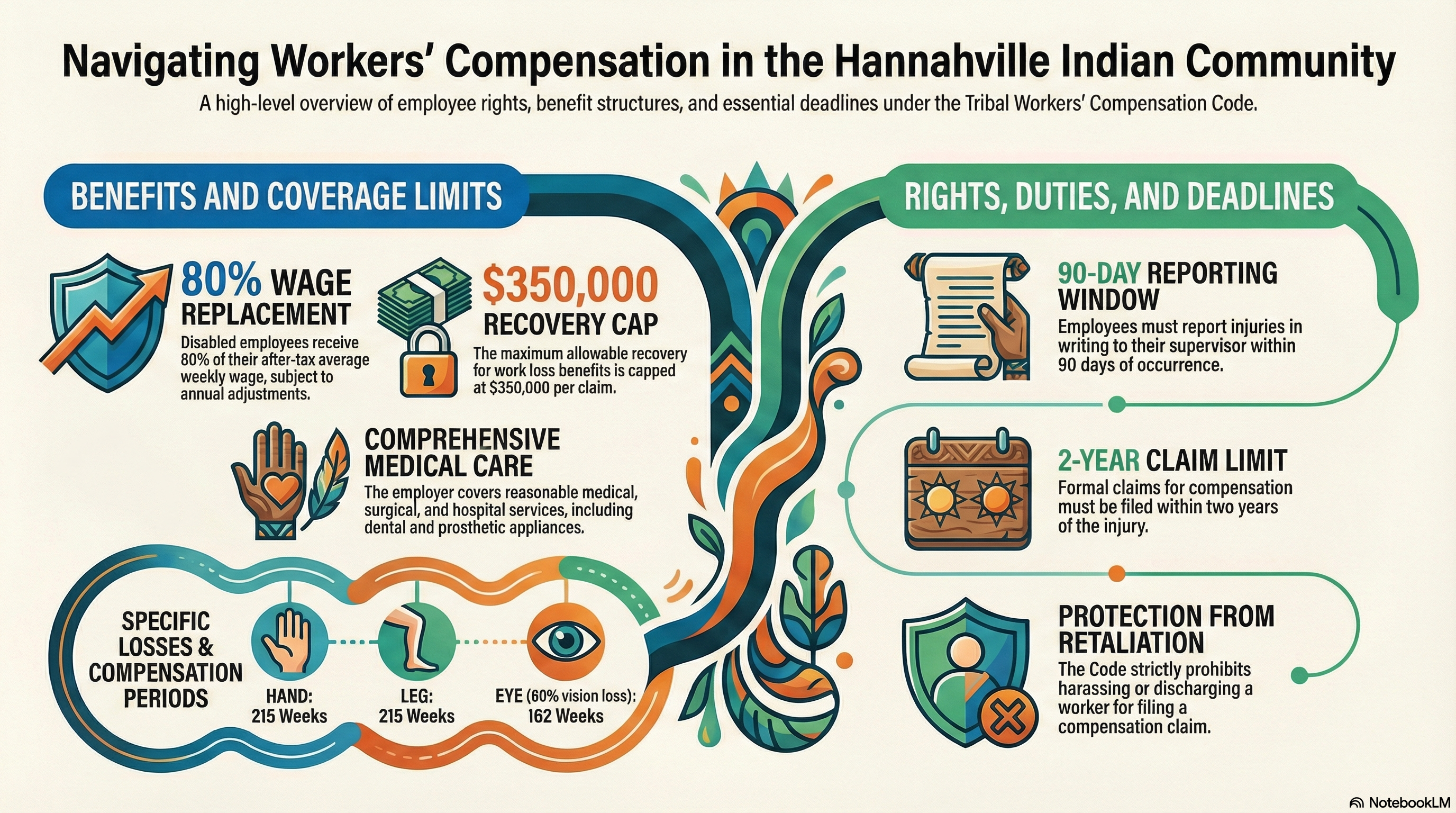
The Compensation Code establishes a comprehensive legal framework for managing work-related injury and death claims within the Tribe’s jurisdiction. This self-funded insurance program provides benefits similar to Michigan state law while explicitly preserving tribal sovereignty and immunity. The document outlines specific protocols for disability classifications, wage loss computations, and medical rehabilitation, while setting a $350,000 maximum recovery limit per claim. Procedural guidelines are defined for a dedicated Workers’ Compensation Judge to oversee disputed cases, hearings, and the approval of lump sum redemption agreements. Furthermore, the code addresses complex administrative issues such as the coordination of benefits with Social Security and penalties for employer noncompliance or vexatious claims. Overall, the text serves as the definitive regulatory authority for ensuring fair compensation and medical care for the Community’s workforce.
Chapter 3 – Right to Work 2016
The Right to Work Code to protect the individual liberties of employees performing labor on tribal lands. This legislation ensures that employment remains accessible regardless of a person’s decision to join, avoid, or financially support a labor organization. Under these rules, any contracts requiring union membership or mandatory dues are considered illegal and unenforceable within the tribe’s jurisdiction. The code prohibits employer retaliation and labor group coercion, while providing a legal framework for victims to seek civil remedies through the tribal court system. Furthermore, the tribe asserts its sovereign authority by clarifying that federal labor laws do not preempt its right to regulate local employment standards. This comprehensive policy aims to foster an economic environment centered on personal choice and freedom of association.

Chapter 4 – Labor Relations Code 2016
The Labor Relations Code is for managing employment and collective bargaining on tribal lands. This legislation grants workers the right to organize while asserting the Tribe’s sovereign authority to regulate labor independent of federal frameworks like the National Labor Relations Act. The code outlines strict protocols for the licensing of business agents, the registration of labor organizations, and the conduct of secret ballot elections to certify or decertify union representatives. To ensure stability, the law prohibits strikes and lockouts, instead providing structured dispute resolution through a court-appointed Special Master. Certain governmental functions and gaming regulatory matters are specifically exempted from negotiations to protect the Tribe’s economic integrity and self-governance. Additionally, the code reinforces the Tribal Employment Rights Ordinance, ensuring that Indian preference remains a priority within all labor agreements.